When History Speaks Through the Body

Unsplash Image by hoch3fotografie
I live in Germany. I share a home with a German partner. My daily conversations unfold in a language shaped by a nation that has faced the consequences of authoritarianism in the most devastating way. For thirty five years I have studied German history, not as an abstract interest, but as a moral inquiry. What does it take for a society to drift toward control and conformity? How does fear become policy?
How do ordinary people become participants?
Here is my plea.
When the people around me, people raised inside a culture that teaches its darkest chapters with sobering honesty, express concern about the direction of the United States, that matters.
When they see familiar patterns, that matters.
When they organize to guard their own democracy from extreme influences crossing the Atlantic…
that matters.
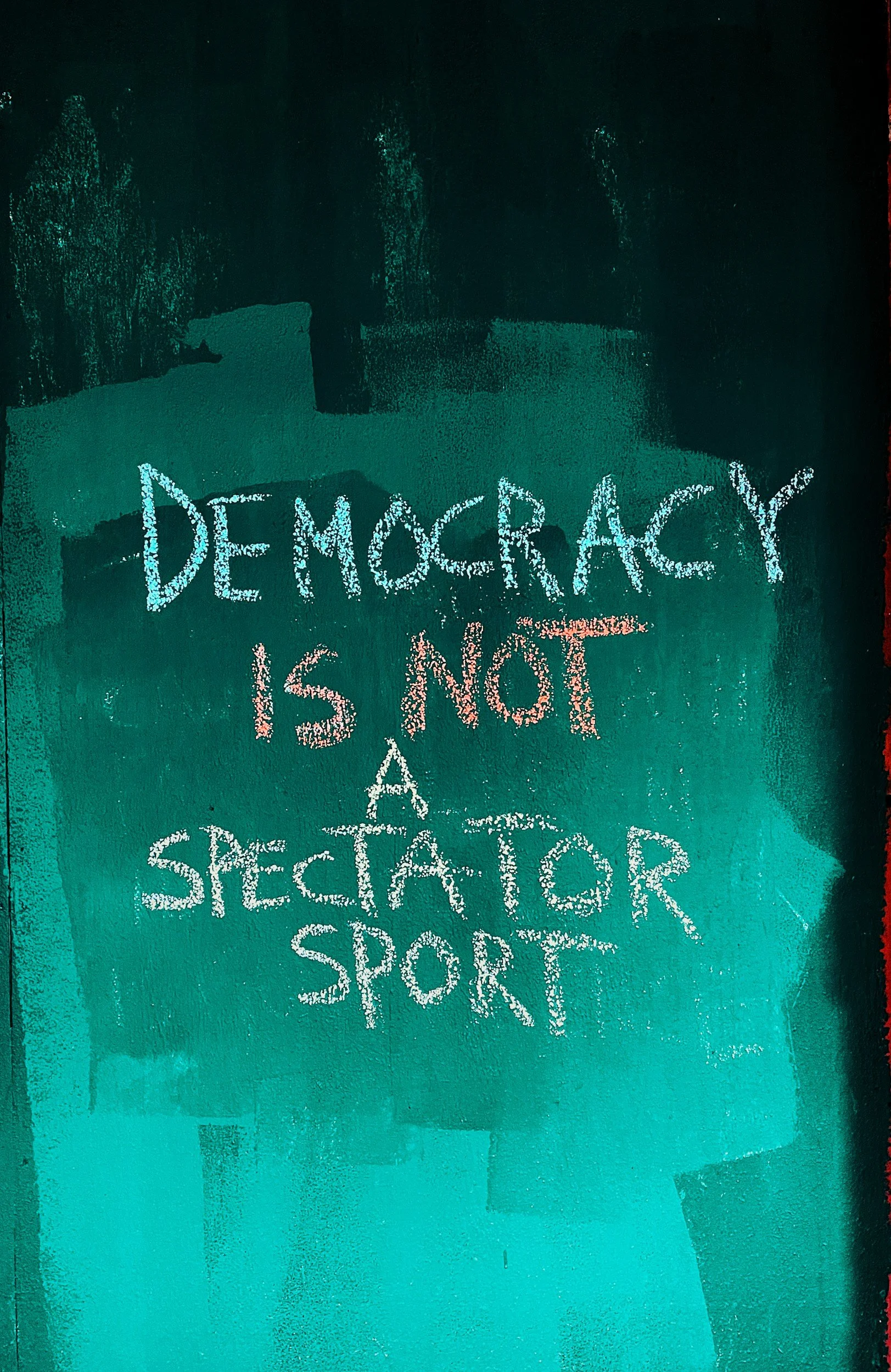
In integrative therapy we pay attention to patterns. We look at how early experiences form neural pathways, how beliefs become automatic responses, how systems repeat what has not been examined. Nations function in similar ways. Collective memory, just like personal memory, lives in the body. It shapes reactions before conscious thought has a chance to intervene.
Psychology teaches that denial is protective. It shields us from cognitive dissonance. If new information threatens our identity, our community, or our past declarations, the mind will defend itself. It will rationalize. It will minimize. It will project blame outward.
Philosophy asks a different question. What is the ethical responsibility of a thinking person when confronted with credible warnings? Existentialists such as Hannah Arendt reflected on the banality of evil, on how ordinary compliance can sustain destructive systems. She observed that harm often advances not through monsters, but through unexamined obedience.
If you are still aligned with rhetoric or policies that erode democratic norms,
PAUSE,
and ask
WHY.

Unsplash Image by Evan Dennis
If the answer is financial gain, consider the psychological cost. Chronic stress, relational fractures, and moral injury do not show up on a balance sheet. The nervous system keeps score.
If the answer is shame, pride, or fear of social rejection, remember what attachment science makes clear. Secure relationships can withstand change. Those who truly care about you are more invested in your integrity than in your consistency.
If the answer is religious devotion, reflect deeply. Faith traditions can nurture compassion and humility. They can also be used to mobilize fear. God is not owned by any political party. Love is not partisan. When spiritual language becomes a tool for division, something essential has been lost.

Unsplash Image by Tom Wilson
I have spent a decade hoping my concerns were misplaced. I prayed to be wrong. Yet the patterns continue to unfold with unsettling predictability. Policies promised in manifestos move from page to practice. Social polarization deepens. Public discourse coarsens.
Even from so far away, I see the toll. Friends across the political spectrum describe exhaustion. Teens and young adults speak of anxiety as a baseline state. A twenty year old in the United States today was ten when this era of relentless upheaval began. Their formative years have been marked by riots, protests, public shaming, political hostility, and institutional distrust. Developmental psychology tells us that adolescence shapes identity and world view. If chaos is the backdrop, chaos becomes normal.
What happens to a generation that has no embodied memory of civic calm? When every socially constructed memory stored in muscle and nerve contains fragments of outrage and alarm, the body remains on guard. Hypervigilance becomes a trait rather than a temporary response.
German history demonstrates that authoritarian shifts rarely appear overnight. They arrive incrementally, justified as necessary corrections, framed as protection, normalized through repetition. The philosophical warning is clear. When language changes, when institutions are undermined, when groups are scapegoated, pay attention.

Unsplash Image by Will Thomas
Read the policy documents.
Study the stated intentions.
Do not rely solely on slogans or social media interpretations.
In therapy we return to primary sources, to original experiences, to what is actually happening rather than what we wish were happening. Apply the same discipline to politics.
Integrative work asks for alignment between thought, emotion, body, and action. Societies require similar integration. Democratic health depends on informed citizens, ethical leadership, and a culture that values pluralism over purity.
None of us can predict the final outcome. Uncertainty is part of the human condition. What we can choose is awareness. We can choose reflection over reaction. We can choose courage over conformity.
History leaves clues. Psychology explains our blind spots. Philosophy clarifies our responsibility. Mental health depends on living in truth.
If voices shaped by a nation that has already walked this road are urging caution, listen.
Unsplash Image by Nick Fewings
About the Author
Leigh is a writer and integrative therapist who has lived in Germany for many years. Married to a German citizen for thirty two years, she has built her adult life within a cross cultural bilingual home, raising her family and developing her network between two national identities.
Her long residence in Germany, along with decades of learning about German history and culture to better understand the human atrocities of mankind, informs both her clinical perspective and her public writing. She approaches political and social issues through the lenses of psychology, philosophy, and mental health, with a focus on how collective events shape the nervous system, relationships, and moral decision making.
Following the recent change in German law that now permits dual citizenship, Leigh has begun the process of applying for German citizenship. She feels a deep sense of connection and responsibility to her communities in both Germany and the United States. Her work reflects that dual commitment, supporting thoughtful dialogue, democratic values, and emotional wellbeing on both sides of the Atlantic.
