WAVE
Water based Attunement for Vitality and Emotion
A water-based emotional support model for postpartum families
Unsplash Photo by Alexey Marchenko
WAVE is a therapeutic model developed from my MSc research in Integrative Therapy. It explores how warm water environments can support emotional regulation and recovery after birth by calming the nervous system and restoring a sense of safety in the body.
WAVE brings together professional experience with birthing families, research in psychology and somatic therapy, and lived understanding of water as a place of regulation and renewal.
What is WAVE
WAVE is a therapeutic approach that uses warm water and guided relational support to help parents settle, reconnect with their body, and recover emotionally after birth. It is designed to work alongside existing maternity and community services using facilities such as birthing or therapy pools. WAVE is not a medical treatment and does not replace psychological care. It offers early emotional support in a way that feels natural, accessible, and non clinical.
Who is WAVE for
WAVE is for parents in the first year after birth who may be experiencing anxiety, low mood, emotional overwhelm, or distress after difficult or medicalised births. It is also intended for practitioners and services seeking gentle, body based ways to support emotional regulation in the postpartum period.
Why WAVE is needed
Many families experience emotional distress after birth, which can affect bonding and wellbeing.
Support often focuses on medication or talking therapies and may not address the body based stress that remains after birth.
Research shows that emotional regulation is shaped by bodily experience as well as thought.
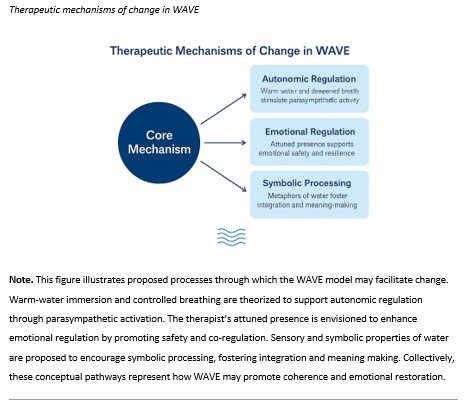
Warm water has been linked to reduced stress and increased calm.
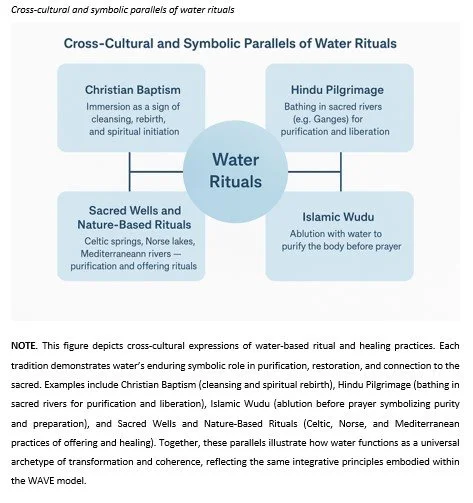
Across cultures, water has long been used to support recovery after major life transitions.
WAVE brings this understanding into a modern therapeutic framework informed by psychology and integrative therapy.
The WAVE process
WAVE follows four stages
Contact and Containment, creating safety and orientation in warm water
Immersion and Attunement, supporting bodily settling and relational presence
Flow and Expression, allowing emotional experience to move without force
Integration and Meaning, connecting bodily experience with personal recovery
These stages reflect how the nervous system restores balance after stress.
Research foundation
WAVE was developed through my MSc research in Integrative Therapy. It draws on work in psychophysiology, perinatal mental health, somatic psychology, relational therapy, and cultural studies of water and healing. The model is a conceptual framework and is now ready for careful pilot development.
Real world potential
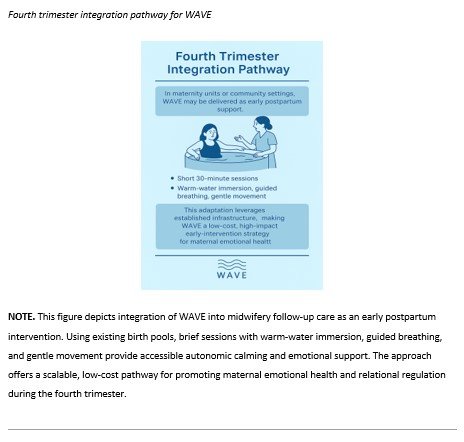
WAVE is designed to be low cost, adaptable to existing pool facilities, and suitable for individual or small group settings. It could be explored in community health settings, maternity services, integrative therapy practice, and postpartum support programs. The long term aim is to support emotional recovery after birth in ways that feel safe, relational, and grounded in the body.
Origins of the work
This work grows from decades of supporting families through birth and recovery and from years spent at sea, where rhythm and safety shape how people settle and reconnect with themselves. WAVE brings these experiences together with academic research into emotional regulation after birth.
Looking ahead
My focus for 2026 is on developing WAVE through pilot work, further research, and collaboration with practitioners and services interested in postpartum emotional wellbeing. This is a step from theory into practice and from personal insight into shared support.
How WAVE Takes Shape
In this short video, I share the journey behind WAVE, how it connects my work with families, and the direction for 2026.
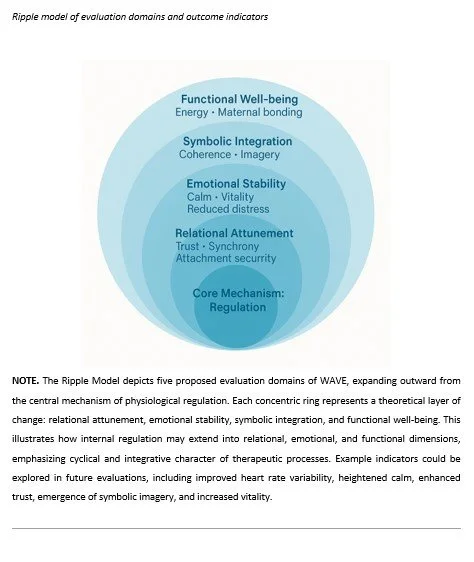
WAVE, which stands for Water based Attunement for Vitality and Emotion, is a therapeutic model developed from my MSc research in Integrative Therapy. The project explores how warm water environments can support emotional regulation in people experiencing distress after birth.
Postpartum mood disorders affect a significant number of parents worldwide and are often treated through medication or talking therapies alone. Research shows that emotional regulation is also strongly influenced by the nervous system and by bodily experience. Many people report feeling disconnected from their body after medical or traumatic births, which can make recovery more difficult.
My dissertation reviewed research from psychophysiology, perinatal mental health, somatic psychology, and relational therapy. It examined how warm water immersion can reduce stress hormones, activate calming nervous system pathways, and increase feelings of safety and containment. Cultural and anthropological studies also show that water has long been used in rituals of recovery and transition after major life events.
From this evidence, I developed the WAVE model as a structured four phase process
Contact and Containment
Immersion and Attunement
Flow and Expression
Integration and Meaning
These stages describe how a guided water based session could support calming, emotional expression, and reflective integration in the early months after birth. The model is designed to work alongside existing maternity and community services using facilities that already exist, such as birthing pools or therapy pools.
The dissertation presents WAVE as a conceptual framework rather than a tested clinical intervention. It recommends future pilot studies, practitioner training, and ethical protocols before implementation. The long term aim is to create a low cost, accessible, and non stigmatizing form of early emotional support for families after birth.
WAVE brings together academic research and over twenty five years of professional experience supporting birthing families. It is now ready to move from theory into carefully designed pilot development.
Public Summary of the WAVE Project
WAVE Model Overview
Theoretical Foundations and Therapeutic Structure

Get in touch to collaborate on the development of WAVE.