Stirring the Pot: Nourishment as an Integrative Practice
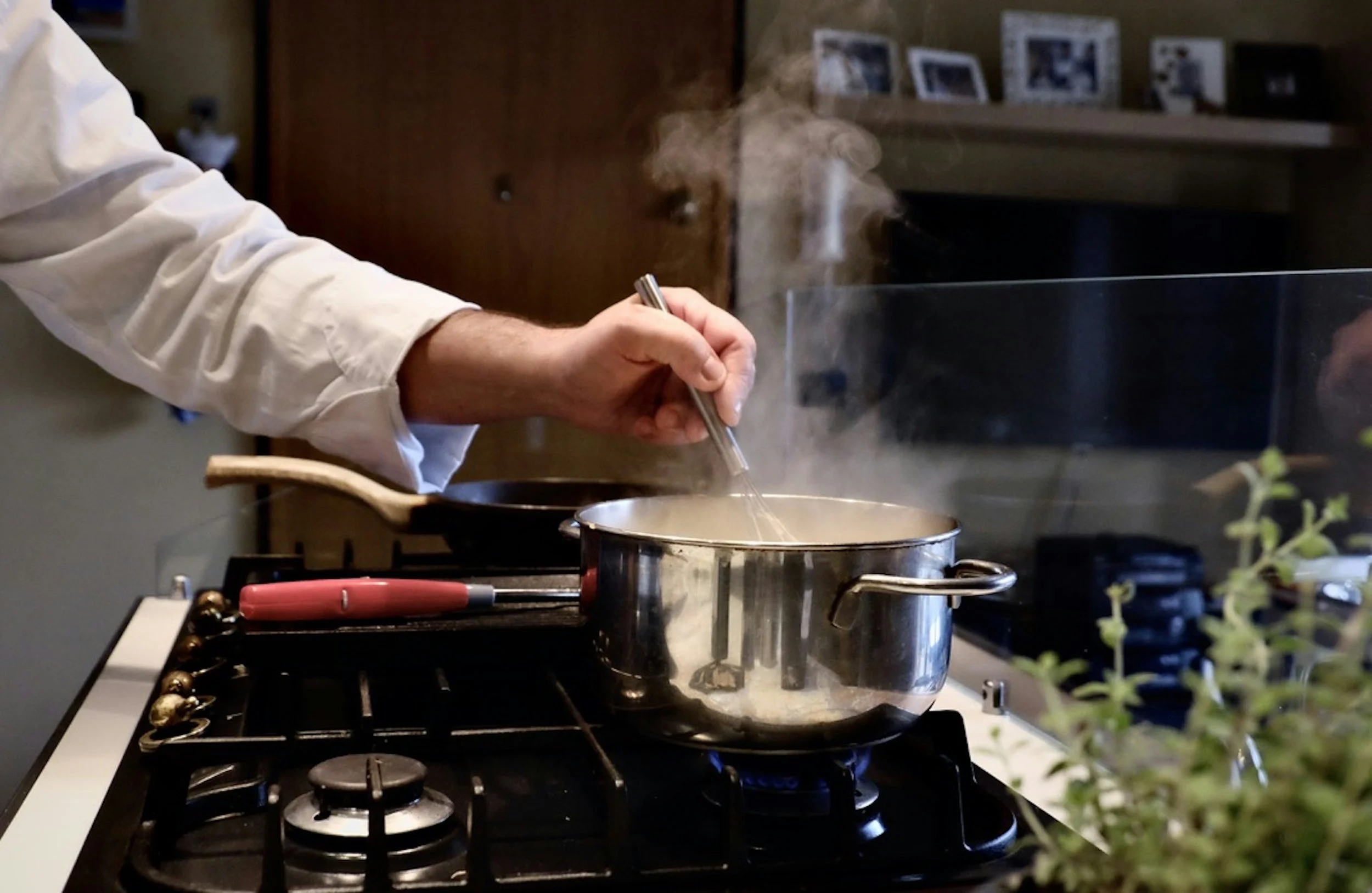
Unsplash Image by rossella porta
There is something quietly soothing about tossing vegetables into a pot and watching them drift into a slow circular rhythm as a wooden spoon moves through them, round and round.
The warmth begins to rise. Colors soften. The scent of onion and celery slowly fills the room. My hand feels the grain of the wooden spoon as it moves through the water. In moments like this, I often think about the long line of people before me who stood at similar stoves stirring similar pots, nourishing families and communities in ways that were both practical and deeply human.
From an Integrative Therapy perspective, these small, ordinary acts are rarely just functional. They are relational, sensory, and embodied experiences.
Cooking engages the body through the senses. We chop, smell, stir, listen, and taste. These simple movements invite presence. They regulate the nervous system through rhythm and repetition. The body begins to settle into a pattern that feels familiar and safe.
Somewhere along the way, nourishment itself has been quietly outsourced. Fast food, takeout meals, and even beautifully curated slow-food experiences have increasingly replaced the simple act of preparing our own meals. Convenience has become a central value in modern life.
Yet I sometimes wonder what somatic and relational processes quietly disappear when nourishment is outsourced from beginning to end.
In Integrative Therapy, we pay close attention to embodied experience. Healing often happens through the small rituals that connect sensation, movement, memory, and meaning. Cooking can become one of these rituals. It asks us to be present with texture, scent, warmth, and rhythm.
Preparing food ourselves creates nourishment that is not only biochemical. It becomes relational nourishment as well. Care given. Care received. Care practiced toward oneself.
The body notices this.
So perhaps the simple act of stirring vegetables in a pot offers something more than soup or stock. It offers a moment of reconnection between body, memory, and the quiet human instinct to nourish life.
The spoon circles slowly through the water. The vegetables drift and gather. The kitchen fills with warmth. In this small moment, something ancient returns.
Recipe: Vegetable Stock
A Somatic Integrative Therapy Practice
This is not only a recipe. It is a short practice in slowing down, noticing the body, and reconnecting with nourishment.
Ingredients
1 onion, roughly chopped
2 carrots, chopped
2 celery stalks, chopped
1 leek, sliced (optional but lovely)
A handful of leafy greens, such as kale or parsley stems
1 to 2 cloves garlic (optional)
1 tablespoon olive oil (optional)
1.5 to 2 liters water
Salt to taste
These vegetables do not need to be perfect. Vegetable scraps from cooking during the week work beautifully.
Step 1: Begin with your senses
Place the vegetables on the cutting board.
Notice the colors and textures. The firmness of the carrot. The papery skin of the onion. The coolness of the celery.
Take one slow breath before you begin chopping.
Step 2: Chop slowly
Chop the vegetables into large pieces. Precision is not important.
Listen to the sound of the knife on the board. Notice the rhythm that develops in your hands.
Allow your breathing to stay slow and steady.
Step 3: Warm the pot
Place the vegetables in a large pot. Add the water and olive oil if using.
As the water begins to heat, notice the change in temperature in the room and the first soft scents rising from the pot.
Step 4: Stir and regulate
Take a wooden spoon and begin stirring gently.
Feel the texture of the spoon in your hand. Notice the circular motion of the vegetables as they drift through the water.
Now slow your breathing to match the rhythm of the stirring.
Inhale slowly as the spoon moves halfway around the pot.
Exhale slowly as the circle completes.
Continue this for a few moments.
This simple rhythm can help the nervous system settle.
Step 5: Let it simmer
Bring the pot to a gentle simmer and allow it to cook for about 30 to 45 minutes.
During this time, the vegetables release their flavor, and the kitchen fills with warmth.
You may stir occasionally. Each time you do, take a slow breath and feel the spoon's steady movement.
Step 6: Strain and taste
Strain the vegetables and keep the clear broth.
Taste it slowly. Notice the warmth and the subtle sweetness that the vegetables have given to the water.
This is nourishment in its simplest form.
A small reflection
Integrative Therapy reminds us that healing often happens in ordinary moments.
A pot of vegetables.
A wooden spoon.
A quiet kitchen.
A body that remembers how to slow down.
Sometimes nourishment begins exactly here.

Unsplash Image by Paul
About the Author
Leigh William writes at the intersection of body, care, and everyday ritual, where ordinary moments become pathways back to ourselves. With an MSc in Integrative Therapy, her work is grounded in a deep understanding of the nervous system, embodied experience, and the quiet ways healing unfolds through daily life.
For over 30 years, she has supported women, children, and families through life’s most meaningful transitions, bringing a steady, compassionate presence to both clinical and lived spaces of care. As a certified birth and postpartum doula and midwife assistant, her work is rooted in attunement, trust, and the rhythms of human development.
Her connection to nourishment and regulation extends beyond the therapy room. As a certified Yachtmaster and certified Ocean Therapist, Leigh integrates the restorative qualities of natural environments into her practice, where the sea, like the kitchen, becomes a place of rhythm, reflection, and return.
Her writing reflects this integrative approach, offering readers a gentle invitation to slow down, reconnect with their bodies, and rediscover the quiet intelligence within everyday acts of care.
