Unsplash Image by Dmitry Ganin
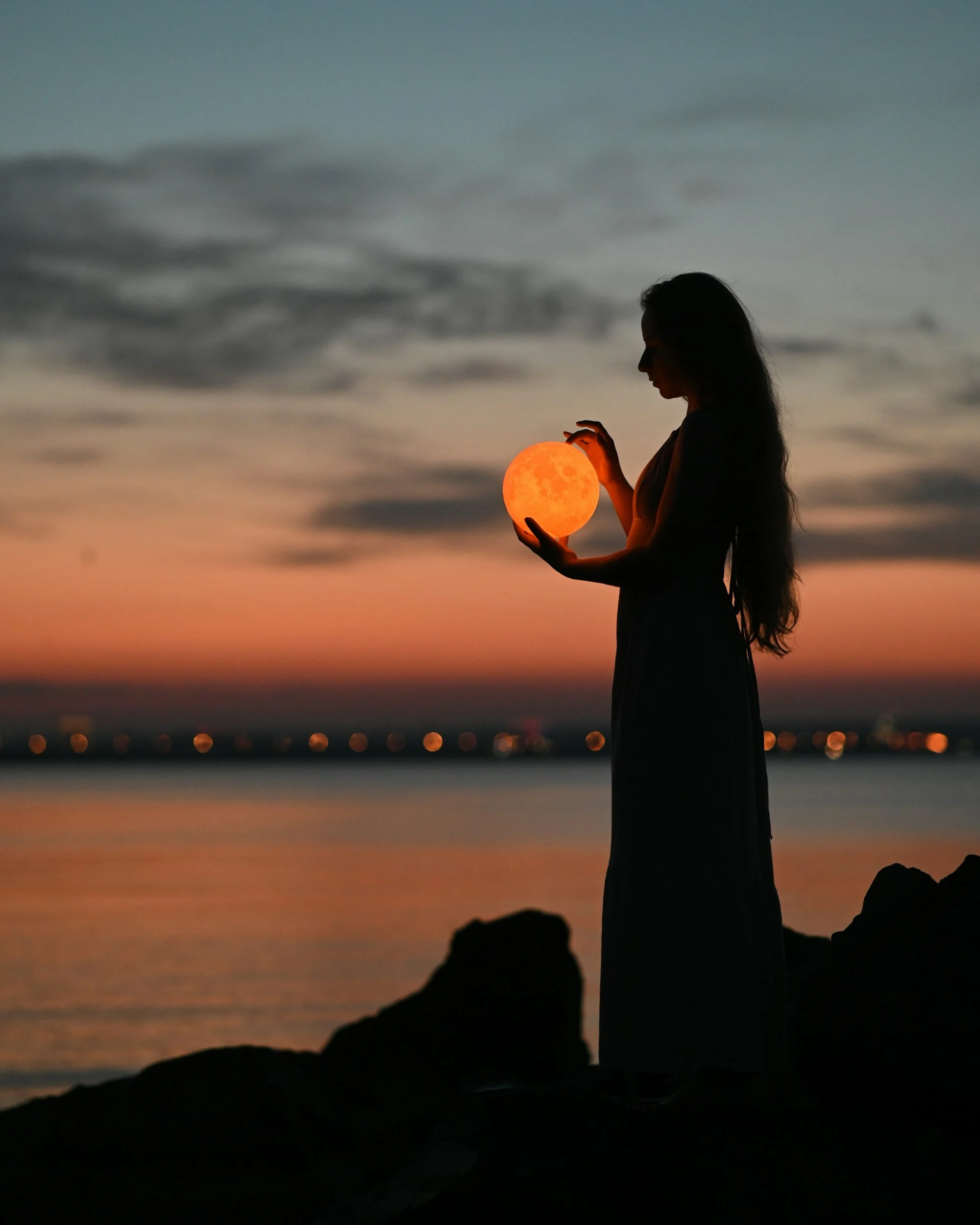
For centuries, women and the moon have shared a quiet rhythm — a 29-day pulse that moves through water, light, and life itself. Sailors have watched it in the tides. Midwives have trusted it in the womb. Poets have written about it in the spaces between.
A new study in Science Advances caught my attention recently — partly because of what it revealed, and partly because of where it came from: Würzburg, Germany.
Many years ago, when I first moved to Germany, I lived in Würzburg. It was a time of early belonging and deep noticing. The river Main wrapped itself around the city like an old, breathing thing. I often walked its banks at night, watching how the current shifted beneath the moon. I didn’t know then that I would one day work in birth, or research the fragile architecture of maternal mood — but somehow, it was all already there.
The Light We Lost
The Würzburg researchers found that before about 2010, many women’s menstrual cycles naturally aligned with the moon — waxing and waning in time with its light and gravitational pull. Since then, that rhythm has faded.
As someone who has spent half her life in birth work, I find this both fascinating and deeply familiar. I’ve watched how light — too much, too little, too artificial — shapes women’s experiences in pregnancy, postpartum, and beyond. Melatonin and estrogen move in tandem; when one falters, the other wobbles too.
The moon once guided that dance — offering a steady pattern of light and dark, fullness and release. Now, our nights are flooded with LED glow and digital flicker. We live in a perpetual half-light — never quite resting, never quite rising.
The Pull of the Tide
When I’m sailing, I can feel the moon’s gravity as surely as any scientist can calculate it. It moves the sea beneath me — and something quieter within me.
The tide teaches humility, the kind that comes from surrendering to forces older and larger than ourselves. Human beings are mostly water, and I’ve long wondered how much of our inner tide we’ve stopped noticing. The lunar pull still exists; we’ve just drowned it out.
Maybe that’s why so many of us feel off rhythm — overstimulated, anxious, unmoored — in a world that never fully darkens.
What the Science Suggests
The researchers in Würzburg didn’t claim that the moon controls menstruation. Their conclusion was subtler: that before artificial light flooded our nights, women’s cycles were in quiet conversation with the moon.
They analyzed decades of data from women who tracked their cycles closely. Before 2010, many began menstruating near new or full moons. After the spread of LED lighting and screens, that synchrony almost vanished — except in January, when the moon’s gravitational pull is strongest and the Earth, perhaps, still remembers.
It’s a reminder that our bodies once moved in time with the world around us — and that modern life, bright and restless, has led us slightly out of tune.
Unsplash Image by Cristina Coban
Returning to Rhythm
In my work with maternal mood disorders — postpartum depression, anxiety, and the quieter storms that follow birth — light is always part of the story.
Morning sunlight. Gentle darkness. Even moonlight. These are not luxuries; they’re biological cues. They tell the body when to rest, when to repair, when to release the hormones that steady the mind.
Healing often begins with rhythm — the way the tide knows when to turn, or how the body, when given darkness, remembers how to sleep again.
As a sailor, I read tide tables before casting off.
As a woman, I’ve learned to read my body with the same respect:
not as a clock to be managed, but as a tide to be honored.
Closing Reflection
The study’s message isn’t nostalgic; it’s an invitation.
To dim the lights.
To step outside on a full moon.
To notice the pull that still moves quietly beneath everything we do.
We haven’t lost our rhythm —
we’ve only stopped listening.
Unsplash Image by Nikola Tomašić
Leigh William is an American writer, sailor, and trauma-informed psychologist based in northern Germany. Her work explores the meeting points between psychology, nature, and human resilience. She once lived in Würzburg, where this research originated — a city that taught her the beauty of rhythm, stillness, and belonging.
