Seeing What They Can’t Say: How to Read Your Child’s Visual Cues of Anxiety
This article helps you recognize the nonverbal signs of anxiety — the visual cues that show your child’s stress before they can verbalize it — and guides you toward connection, not correction.

Unsplash Image by Vitaly Gariev
Why Visual Cues Matter
Human communication is mostly nonverbal.
Research shows that up to 80% of emotional communication happens through body language, facial expression, and tone (Verywell Mind).
When a child becomes anxious, the nervous system reacts before their words do.
Studies using eye-tracking technology found that children with anxiety look away from emotional faces faster and show higher physiological arousal (Frontiers in Psychiatry, 2021).
In other words: their body tells the story before their voice does.
When your body language and words align - calm tone, open posture, relaxed face - your child’s brain receives a powerful signal: I am safe here.
What Anxiety Looks Like in the Body
Every child’s cues are unique, but anxious energy often shows up in recognizable patterns.
The following chart can help you notice the signs early, when regulation and reassurance can still prevent escalation.
Visual Companion Guide: Body Language Cues of Childhood Anxiety
Use this as a quick reference during transitions, stressful moments, or new situations.
These are clues, not labels. Observation is the goal, not correction.
Posture & Movement
Shoulders lifted, rounded, or hunched in
Fists clenched or arms held close to the torso
Repetitive motions: pacing, tapping, rocking
Turning away or leaning back from people or tasks
Sudden stillness or “freeze” posture
Eyes & Face
Avoiding or over-fixating on eye contact
Darting eyes or scanning the room
Lips pressed together or jaw tense
Face blank, expression minimal, or “checked out” look
Breathing & Voice
Shallow, fast breathing (chest movement visible)
Sudden sighing or throat clearing
Higher pitch, uneven speech, or silence mid-sentence
Notice patterns instead of moments.
When you track these cues over time, you begin to understand your child’s specific language of stress, and how to meet it with presence.
What the Research Reveals and What It Means for You
Unsplash Image by Ling App
The Body Speaks First
Anxiety activates the body’s stress system before the child consciously recognizes fear. Chronic activation can affect learning and emotion regulation (Harvard Center on the Developing Child, 2024). Responding early, with warmth instead of interrogation, interrupts that pattern.
Avoidance Isn’t Defiance
Eye-tracking data shows anxious children avert their gaze from emotional stimuli as a form of protection, not defiance (Frontiers in Psychiatry, 2021). When they look away or shut down, they’re trying to feel safe, not disrespectful.
Alignment Creates Safety
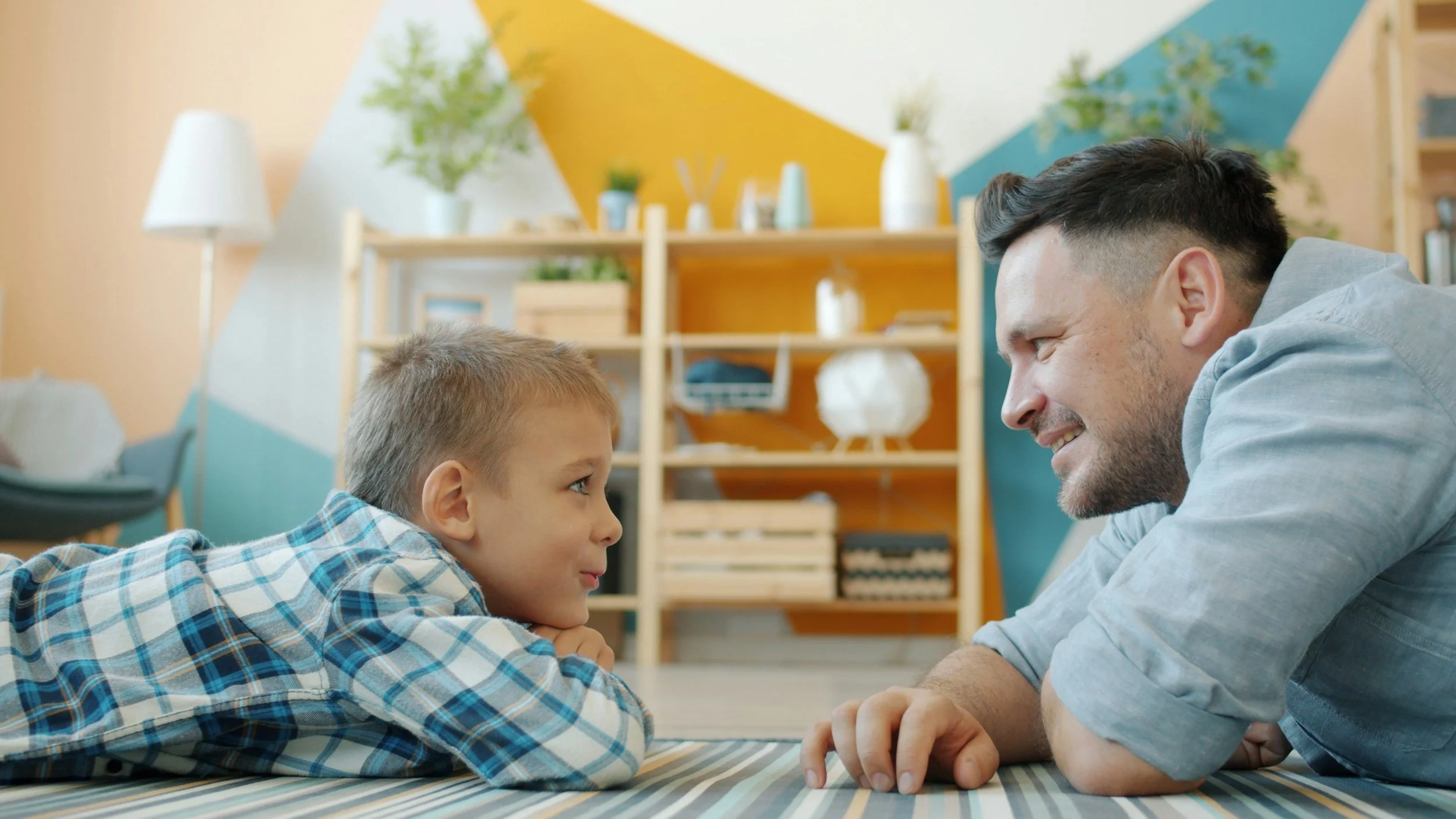
When your body, voice, and words align, you model emotional congruence. That alignment builds trust faster than any strategy or script ever will.
Unsplash Image by Vitaly Gariev
Parent Practice: Responding Without Words
1. Pause Before You Speak
Notice their breathing, posture, or eyes. Take a deep breath yourself. Calm begins with you.
2. Match Calm With Calm
Soften your shoulders, lower your voice, and meet their energy gently. Then say one small thing and stop there.
“I see you.”
“Looks like that felt big.”
“I’m right here.”
3. Offer Choice
Ask simple, open questions that restore agency:
“Would you like to sit together or take space?”
“Do you want to talk now or later?”
Choice reduces panic. Predictability builds safety.
4. Connect Before Correct
If they’re dysregulated, fixing or explaining will backfire. Your calm presence does more than any advice could.
For Neurodiverse or Highly Sensitive Kids
Children with autism, ADHD, or sensory processing differences often experience anxiety more intensely. Their brains process tone, facial expression, and energy long before words.
In these moments:
Use fewer words and more calm.
Give longer pauses before expecting a response.
Keep voice low, body relaxed, and eye contact soft.
“I’m here.”
“That felt big.”
“You’re safe with me.”
Safety doesn’t come from control. It grows from consistency.
Bringing It Into Daily Life
Create short “quiet check-ins".” For example, thirty seconds of shared stillness without talking.
Track your child’s repeating anxiety cues, like fidgeting or zoning out, and gently name them when appropriate.
Model regulation aloud: “My shoulders feel tight, so I’m going to take a breath.”
Each small moment teaches that emotions are safe to notice and safe to survive.
The Heart of It
Your child’s body tells their story before their words do. When you learn to read those quiet signs and respond with steady compassion, you become the safest place in their world. That’s the essence of intentional parenting: presence before problem-solving.
Keep showing up.
Keep softening your edges.
Keep remembering: the way you hold the moment is the medicine.
I’m right here with you.
